Kuratert av Monica Holmen & Stefania Duricova
(Scroll down for English)
Introduksjon frå KRAFT
KRAFT er glade for å invitere til utstillinga Moments of Blackout, kuratert av Monica Holmen og Stefania Duricova. Deltakande kunstnarar er Robin Everett, Margrethe Kolstad Brekke, Jannecke Heien, Eirik Falckner, Lorie Ballage og Eirik Brandal.
I 2025 hadde KRAFT ei open utlysing for 2026 der vi bad samarbeidande kunstnarar og kuratorar kome med forslag til prosjekt som utfordra eller utvida tradisjonelle utstillingsformat. Stefania Duricova og Monica Holmen søkte med utstillinga Moments of Blackout, som er det tredje og avsluttande prosjektet for den opne utlysinga.
Moments of Blackout kretsar kring energi, og følgjer energi i ulike former gjennom historia og framtida, via material og teknikk, potensial og politikk. Ved å ta utgangspunkt i ei fiktiv framtid, inviterer utstillinga publikum til å reflektere over samtida – korleis forheld vi oss til energi, og kva ønskjer vi at forholdet mellom menneske, natur og energi skal vere i tida som kjem?
Utstillinga er støtta Kulturrådet.
Kuratorutsegn av Monica Holmen & Stefania Duricova
For mange av oss er energi eit abstrakt, oppfunne konsept, lada med bilete av planetens undergang eller frelse, fare eller tryggleik, mangel eller overflod. Korleis vi snakkar om energi handlar såleis meir om oss sjølve enn om energi i seg sjølv. Med dette i mente, førestiller Moments of Blackout seg ei framtid der energi er verdifull mangelvare og ettertrakta, og stiller spørsmåla: Kva påverknad ville eit slikt scenario ha å seie for røynda i framtida, og såleis for kunsten? Vert vi forferda eller stimulerte av det umettelege begjæret og hungeren vi har for evig vekst? Dersom det finst ei framtid for menneske og andre vesen, er ho uviss.
Det tjuefjerde århundret markerer ei endring i energidistribusjonen; mangelvare er ikkje lengre eit hypotetisk problem ein kun finn i science fiction. Mangel på energiressursar som vatn, elektrisitet, gass og fossil kjem som resultat av dårleg politisk styring, prisauke, ustabil infrastruktur og diktatorar som fører ei urettvis fordeling av ressursar, der krig og profitt vert prioritert over løysingar. Dette er utgangspunktet for gruppeutstillinga Moments of Blackout, der seks kunstnarar utforskar energi gjennom kunsthandverk, stadssensitive lydinstallasjonar, relasjonelle praksisar og spekulative narrativ. Ved å trekkje vekslar på Kim Stanley Robinsons insistering på at omstridde framtider må verte danna med konkrete førestillingar framfor abstrakte teorier, byggjer utstillinga på science fiction både som ein metafor og som ein profeti. Utstillinga forlet slitne antroposene narrativ, til fordel for førestillinga om ei alternativ framtid ein stad mellom utopi og dystopi. I denne fjerne framtida kan nye former og måtar å leve på oppstå, det vere seg symbiotiske, kyborgske eller noko heilt anna.
Menneskas kollektive fantasi rommer myten om evig aktivitet og evig liv. Frå førhistorisk tid til vår samtid (og truleg langt inn i framtida) har energiressursar hatt ein nesten gudeleg posisjon. Basert på nymaterialismens idear om materiale som noko aktivt og levande heller enn passivt og statisk, handsamar utstillinga Moments of Blackout energi både som noko materielt og spirituelt. Såleis trekker utstillinga linjer til urfolkssamfunn der ein har hatt kosmologiske forklaringar der dyreliknande skikkelsar har kunne endra og transformert energi om til materie.
Det vert måla eit mørkt bilete når kjernekraftverk må stengje grunna låge vasstandar i elvene og det vert utkjempa skitne krigar over olje og gass. Likevel nedskalerer fleire styresmakter og bedrifter klimamerksemda si. Global oppvarming er eit symptom på ein økologisk situasjon der teknologi og neoliberalistisk kapitalisme vert favorisert på planeten, med KI-revolusjonen som den seinaste, mest akutte indikatoren. Energi er kjelde til krig og diplomatiske samarbeid, til utarming, splid, eigarskap og okkupasjon. Som ord kan energi sikte til ein stor variasjon kraftressursar, men i utstillinga Moments of Blackout undersøkjer og tilnærmar vi oss energi som eit overordna og utvida konsept framfor som i tydinga av ulike ressursar.
Publikum er inviterte til å dvele og kvile i utstillinga medan dei ser, høyrer og fantaserer. Dei utstillande kunstnarane sine materiale og medium er vesentlege for korleis uttrykka og utforskinga deira kring energi kjem til syne. Til dømes kan overgangen frå energi til samtidig lydkunst referere til transduksjon – prosessen med å konvertere ei form for energi til ei anna, til høyrbar lyd. Å omdanne eller gjere usynlege naturkrefter til konkrete og handfaste uttrykk synleggjer også kor avhengige vi er av ulike energisystem. Kvart kunstverk i utstillinga går på ulikt vis i dialog med energi; somme treng ei energikjelde for å verte aktivert, andre treng mykje energi for å verte produsert.
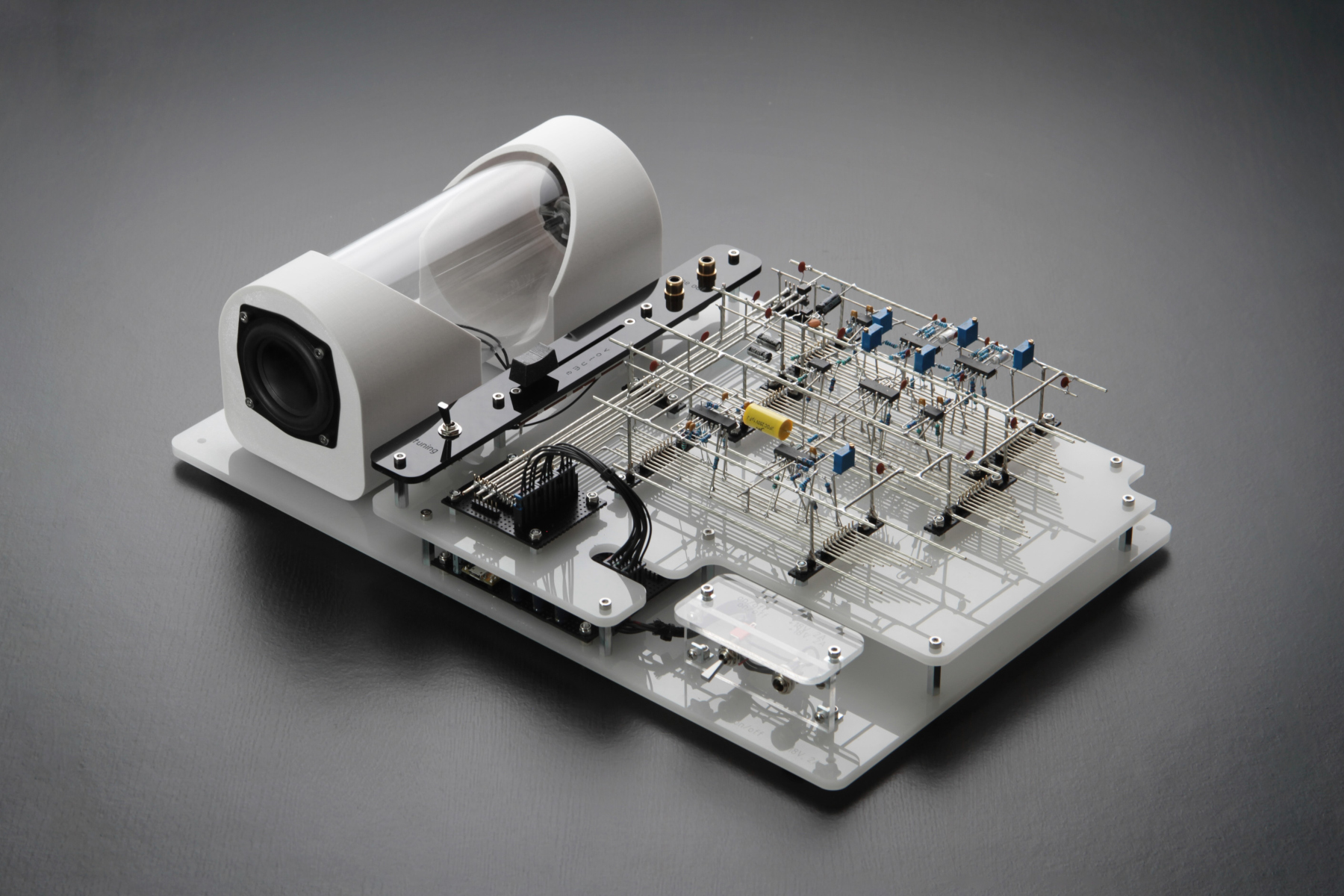
Med utgangspunkt i Solarpunk-rørsla og FN-rapportar adresserer Margrethe Kolstad Brekkes prosjekt den framtidige energikrisa frå både ein spekulativ og ein realistisk ståstad. Dette kjem til uttrykk både ved å nytte den gamle indiske trykketeknikken Kalamkari på tekstilar, samt deltakarbaserte hendingar i samarbeid med den indiske yogien og aktivisten Jaiveer Sharma. Robin Everetts lydinstallasjon er eit stad- og rørslesensitivt verk som liknar eit totemisk vesen. Ved å respondere på objekt og vitjande i nærleiken, genererer det lyd frå eit kollektivt nærvere og omdannar omgjevnadane til eit levande, sirkulært energisystem. Der Everetts installasjon er avhengig av menneskeleg tilstadeverande for å fungere, er kretsskulpturen åt Eirik Brandal ei sjøvforsynt konstruksjon som både sender ut og lekamleggjer energi. Balanserande mellom maskin og skapning vekkjer det assosiasjonar til alternative røynder og hybride nærvær.
Også Eirik Falckners gropbrende keramiske skulpturar sneiar innom kosmoteologiske problemstillingar. Gropbrenning er ein teknikk som er nesten 30 000 år gamal, der ein brenn materiale direkte i eld. Teknikken medfører direkte spor av flammer og jord i kunstverka – av energien dei er laga med – og refererer samstundes til tusenvis av år med objektmaking. I kontrast til dei råe naturkreftene fungerer Lorie Ballages skulpturar både som kunst og lamper. I denne konteksten som håpets fyrtårn mot ein elles mørk omgjevnad. Ved å kombinere keramikk og elektrisitet trer Ballages hybride skulpturar inn ein symbiocen tanke om sambuarskap som løysing på framtidig eksistens. I Jannecke Heiens workshop vart deltakarane spurde om å ta del i utstillinga på dette premisset; plasser deg sjølv i ei fjern framtid og spør deg sjølv om kva vi har bygd, kva det har kosta, og om å kople seg frå framleis er ei løysing. Objekta laga i workshopen vert innlemma i utstillinga som ei påminning om at vår felles framtid allereie har vorte forhandla.
-----
Biografiar
Lorie Ballage (f. 1994, FR) har mastergrad i kunst frå Fakultetet for kunst, musikk og design ved Universitetet i Bergen. Kunstpraksisen hennar kretsar kring vatn – både konkret som eit omskiftande element, men også som metafor for alt det flytande i livet. Ballage har stilt ut ved mellom anna Kunstnernes Hus, Carl Berners Prosjektrom, Bergen Kunsthall, Kunstgarasjen, KRAFT og Pragovka Galleri i Praha. Ho har også stilt ut ved messer og biennalar som Ceramic Brussels i Belgia og Gyeonggi Ceramics Biennale i Sør- Korea.
Margrethe Kolstad Brekke (f. 1979, NO) har mastergrad i tekstilkunst frå Kunst- og designhøgskulen i Bergen (KMD). Brekke har utvikla fleire tverrfaglege samarbeidsprosjekt, blant desse Luftballett-prosjektet (2015-18) og Rjukan Solarpunk Academy (2019-). Sidan 2016 har ho hatt ein pågåande dialog med Kristin Guldbrandsen Frøysa, energidirektør ved Universitetet i Bergen. Saman utforskar dei korleis kunst kan hjelpa den naudsynte energiomstillinga, og korleis kunstnariske metodar kan gjere forsking rikare. Deira pågåande samarbeid utgjer grunnmuren for det tverrfaglege prosjektet NYE STRUKTURER FOR STERKT REDUSERT FORBRUK, som held fram med å utviklast gjennom ulike samarbeid, inkludert med Arbeiderbevegelsens Arkiv, Folkets Hjørne (LO) og Tusenårsteppe, med første presentasjon for offentlegheita planlagd i Dronning Sonjas KunstStall i 2027. Brekke har stilt ut ved mellom anna Flag-no-Flag og Museion i Italia, Hordaland Kunstsenter i Bergen, Kunstnerforbundet i Oslo, samt i samarbeid med Arctic Art Institute (Arktisk Kunstinstitutt).
Eirik Brandal (f. 1991, NO) har mastergrad i komposisjon frå Det Kongelege Konservatoriet i Haag. Med utgangspunkt i musikk-komposisjonstudier, har arbeidet hans utvikla seg meir i retning elektroniske lydskulpturar med fokus på den ibuande venleiken i kretsar. Ved å leggje kretsar etter arkitektoniske og estetiske prinsipp heller enn brukarvenlege og praktiske, dannar Brandal kunstnariske rom. Han nyttar lyd og lys som verkemiddel for å få skulpturane sine indre prosessar til å oppfattast som uavhengige, kommunikative einingar i møte med publikum. Brandal har stilt ut ved mellom anna Vestlandsutstillinga, Warsaw Autumn Festival i Polen, Oppland kunstnsenter og Le Bon Accueil i Rennes, Frankrike.
Eirik Falckner (f. 1995, NO) har bachelorgrad i kunst frå Fakultetet for kunst, musikk og design ved Universitetet i Bergen og arbeider med mellom anna keramikk, tekstil, video, måleri og installasjon. Falckner refererer ofte til former vi finn i naturen, som til dømes fossil, korallar eller røter. Samstundes peiker dei mot noko ukjend og urovekkjande, noko ein kan sjå for seg eksistere både på botnen av havet og langt ute i verdsrommet. Eit gjennomgåande tema i arbeidet er ei kjensle av det forgjengelege som menneske i møte med naturens brutale kraft. Falckner har stilt ut ved mellom anna Kristiansund Kunsthall, Høyersten Contemporary, Kunsthall Grenland og Skog Art Space.
Robin Everett (f. 1989, GBT-SC) har mastergrad i kunst frå Fakultetet for kunst, musikk og design ved Universitetet i Bergen. Everett arbeider med lyd, skulptur, tekst og video for å belyse sosiale og tekno-økologiske problemstillingar. Ved å lage spekulative framtidsscenario lagar han rom der framtida kan nyttast som reiskap for å prøve å forstå og kome nærare problemstillingar vi har i dag. Gjennom verka sine skapar han samansettingar der dei kompliserte koplingane mellom klima, industri, teknologi og kultur som utgjer infrastrukturen vår, vert undersøkte. Everett har stilt ut ved mellom anna Mustarinda, Podium, LIAF, Studio 17 og Galleri Augusta.
Jannecke Heien (f. 1962, NO) er utdanna ved Kunst- og designhøgskulen i Bergen. Heien arbeider med installasjon, biletmedia og video som ofte kretsar kring sosiale strukturar. Korleis ulike økonomiske, strukturelle og kulturelle endringsprosessar kjem til syne på bakkeplan har vore kjelda til mykje av arbeidet. Sidan 2010 har ho utvikla prosjekt som ser på menneska si evne til å førestille seg framtidige tilstandar. I nokre av biletprosjekta står “den snille byråkraten” i sentrum. I 2006 var ho ein av medstiftarane for Kunstjournal B-Post, eit kunstfagleg tidsskrift som vart publisert årleg fram til 2015. Heien har stilt ut ved mellom anna Möbius Galleri, Kunsthall 3,14, Kunstgarasjen og Trykkeriet.
Monica Holmen (f. 1982, NO) er kurator ved Nitja Senter for Samtidskunst og arbeider også som uavhengig kurator, redaktør og skribent. Heller enn å følgje fastsette agendaer eller fokusområde, byggjer Holmen prosjekt på kunstnarar si nyfikne og dedikasjon, samt kunstens evne til å nyansere ei polarisert verd. Ved å insistere på relevansen og det viktige med kunstnarisk utforsking kring spesifikke problemstillingar, er kunstens evne til å få oss til å revurdere haldningar og standpunkt av særskild interesse i Holmens kuratorgjerning. Ei av kunstens viktigaste roller i samtida er å fremje ulike standpunkt, og få oss til å engasjere oss i komplekse spørsmål. Det er eit velkjent ordtak at ein burde gå ei mil i nokon andre sine sko – kunst oppmodar oss til å sjå verda gjennom andre sine (metaforiske) auge. Holmen har mastergrad i kunsthistorie frå Universitetet i Oslo, og har kuratert utstillingar ved mellom anna Galleri F15, Prosjektrom Normanns, Tegnerforbundet og Podium.
Stefania Duricova (f. 1989, SK) er kurator og ph.d.-kandidat ved University of St. Andrews, kor ho undersøkjer nasjonalisme og politikk i kunst i Sentral-Europa. Ho leia det inkluderande prosjektet House of Mine (2022-24) ved East Slovak Gallery, der Nitja var blant samarbeidspartnarane. Duricova har medkuratert den permanente utstillinga Comedy of Spirit (2025-30) ved East Slovak Galleri. Hennar kuratoriske praksis fokuserer på politiske, økologiske og feministiske framgangsmåtar. Ho har arbeidd som føredragsassistent ved Fakultetet for Kunst på det Tekniske Universitetet i Kosice, og som lærarassistent ved Universitetet i St. Andrews. Duricova publiserar jamnleg tekstar i kunstfaglege tidsskrift og katalogar, og sit i redaktørstyret til Flashart Czech and Slovak edition.
Introduction by KRAFT
KRAFT is pleased to welcome the exhibition Moments of Blackout, curated by Monica Holmen and Stefania Duricova. The exhibiting artists are Robin Everett, Margrethe Kolstad Brekke, Jannecke Heien, Eirik Falckner, Lorie Ballage, and Eirik Brandal.
In 2025, KRAFT announced an open call for 2026, inviting collaborating artists and curators to suggest projects challenging or expanding traditional exhibition formats. The third and final project from the open call is the exhibition Moments of Blackout with which Stefania Duricova and Monica Holmen applied.
Moments of Blackout revolves around energy, following different forms of energy, via materials and techniques, politics and potential, throughout history and into the future. By taking a point of entry in a fictive future, the exhibition invites the audience to reflect on the present – how do we think about and relate to energy, and what do we wish the relationship to be between humans, nature, and energy in the years ahead?
The exhibition is supported by Kulturrådet.
Curator Statement by Monica Holmen & Stefania Duricova
Energy is for many of us an abstract, dreamed-up concept, laden with visions of planetary destruction or salvation, danger or security, deficiency or excess. What we say about energy, then, tends to tell us more about ourselves than about energy itself. With this in mind, Moments of Blackout imagines a future where energy is scarce, contested, and precious, and asks: what impact will a scenario like this have on future reality and accordingly on artmaking? Does the insatiable growth, the need, and desire horrify or stimulate us? The future, if there is one for humans andother beings, is uncertain.
The twenty-fourth century marks a transformation of the energy distribution: scarcity is no longer an issue reserved for science fiction only. Lack of energy resources such as water, electricity, gas, and fossil fuels is a result of bad politics, increasing prices, unstable infrastructures (or lack of them), dictators spearheading unjust distribution of resources, prioritising warfare and profit over just solutions. This is the point of departure for the group exhibition Moments of Blackout, featuring six artists who explore notions of energy through craft-based artworks, site-sensitive sound installations, relational practices, and speculative narratives. Drawing on Kim Stanley Robinson’s insistence that contested futures must be concretely imagined rather than abstractly theorised, the exhibition builds on the idea that science fiction is both a metaphor and a prophecy. The exhibition departs from the exhausted Anthropocene narratives to encourage imaginative alternative futures somewhere between utopia and dystopia. In this distant future, new ways and forms of existence, whether symbiotic, cyborg, or those not-yet-imagined, can emerge.
Our collective imagination conceives an eternal activity, life everlasting, a myth. From ancient prehistoric times through the present day onwards into a far-away future, resources of energy have always been given an almost God-like position in society. Based on New Materiality, energy is understood here as both material and spiritual, and in thinking about spirit, we engage with indigenous thoughts to envision a cosmology with an animistic deity-like figure capable of transforming energy into matter.
While nuclear power plants are forced to shut down due to record-low levels of rivers and wars are fought for crude oil and gas, a stark picture comes into focus. Yet, several governments and corporations have scaled down their climate actions. Global warming is a symptom of an ecological situation that puts our technologies over our planet in the system of neoliberal capitalism, with the AI revolution being one of its most acute indicators. Energy is a cause for wars and diplomatic alliances, for extraction, division, possession, and above all obsession. As a noun, energy can encompass a wide range of power sources, but here, we explore the concept, rather than its meaning as a resource.
Envisaged as a multi-sensory environment, visitors are invited to pause and linger in the exhibition as they look, listen, imagine, and fantasise. Materiality and medium are vital elements in how exhibiting artists are pushing their expression of energy. Conceptually, the transition from energy to contemporary sound art, for example, can refer to transduction – the process of converting one form of energy into another, into audible sound. Making invisible environmental forces tangible highlights our dependency on energy systems. Each work in the exhibition engages with energy in a different way: some necessitate an energy source to be activated, others require a considerable amount of energy to be produced.
Informed by the Solarpunk movement and founded on UN reports, Margrethe Kolstad Brekke’s project addresses the future’s energy crisis from both a speculative and a realistic point of view. Brekke’s ideas come to life through textile works employing the ancient Indian textile printing technique Kalamkari and participatory events in collaboration with the Indian activist and yogi Jaiveer Sharma. Resembling a totemic deity, Robin Everett’s sound installation is site-specific and audience-sensitive. Responding to nearby objects and visitors, it generates sound from collective presence, transforming the surroundings into a living reciprocal energy system. While Everett’s installation depends on human presence, Eirik Brandal’s circuit sculpture is a self-sufficient being simultaneously emitting and embodying energy. Its associative presence seems to balance between machine and creature, evoking notions of alternative realities and hybrid/more-than-human presences.
Also tapping into ideas of Cosmotheology, Eirik Falckner’s ceramic pit-fired sculptures bear visible traces of the process on their surfaces. Dating back almost 30 000 years, pit-firing is an ancient technique exposing the material directly to fire. Consequently, Falckner’s works carry the marks of flame and earth – the energy that made them – while also referencing millennia of object-making. In contrast, Lorie Ballage’s sculptures double as sculptures and lamps, and may in this context seem like beacons of hope in an otherwise bleak setting. Combining ceramics and electricity, Ballage’s hybrid sculptures relate to the Symbiocene and ideas of co-habitation as options for a future existence. Focusing on possible solutions for a more sustainable and equitable future, Jannecke Heien’s workshop asks invited participants to inhabit the exhibition’s premise: to place themselves in the twenty-fourth century and ask what we have built, at what cost, and whether solutions like decoupling are still possible. Objects created in the workshop will be included in the exhibition as reminders that our collective future is already being negotiated.
----
Biographies
Lorie Ballage (b. 1994, FR) received her master’s degree in Fine Arts from the Faculty of Art, music and design at the University of Bergen. Her artistic practice revolves around water – both concretely as a fluid element, and metaphorically as the fluidity in human experience. Ballage has exhibited at Kunstnernes Hus, Carl Berners Prosjektrom, Bergen Kunsthall, Kunstgarasjen, KRAFT, and Pragovka Gallery in Prague, amongst others. Additionally, she has shown work at fairs and biennials such as Ceramic Brussels in Belgium and Gyeonggi Ceramics Biennale in South Korea.
Margrethe Kolstad Brekke (b. 1979, NO) received her master’s degree in Textiles from Bergen Academy of Art and Design. Brekke has developed several interdisciplinary projects, including the LUFTBALLET (Air-Ballet) (2015–18) and the Rjukan Solarpunk Academy (2019–). Since 2016 she has had an ongoing dialogue with Kristin Guldbrandsen Frøysa, the Director of Energy at the University in Bergen. Together they explore how art can be of help to restructure energy, and how artistic methods can be of enrichment to science. Their ongoing collaboration makes the foundation for the interdisciplinary project NYE STRUKTURER FOR STERKT REDUSERT FORBRUK (New Structures for Strongly Reduced Consumption), which is being further developed in collaborations, including with The Norwegian Labour Movement Archives and Library, Peoples Corner (at LO, The Norwegian Confederation of Trade Unions), as well as for the Millenium Tapestry (Tusenårsteppe), the first public presentation of which is planned in Queen Sonja’s KunstStall in 2027. Brekke has exhibited at, amongst others, Flag-no-Flag and Museion in Italy, Hordaland Kunstsenter, Kunstnerforbundet i Oslo, as well as in collaboration with the Arctic Art Institute.
Eirik Brandal (b. 1991, NO) received his master’s degree in Composition from the Royal Conservatory in The Hague. With a basis in music composition, Brandal’s work has developed in a sculptural direction, highlighting the inherent beauty of circuits in electronic light sculptures. By constructing the circuits according to architectural rather than useful and practical principles, he creates aesthetic spaces. Using light and sound as tools, the inner processes of the sculptures can be perceived as independent, communicative beings. Brandal has exhibited at, amongst others, Vestlandsutstilling, Warszaw Autumn Festival in Poland, Oplandia Center for Contemporary Art, and Le Bon Accueil in Rennes, France.
Eirik Falckner (b. 1995, NO) received his bachelor's degree in Fine Arts from the Faculty of Art, Music and Design at the University of Bergen. He works with ceramics, textiles, video, painting, and installation, often referring to shapes and entities found in nature, such as fossils, roots, and corals. Though familiar, they also point to something unknown and uncanny, something that could exist both at the bottom of the ocean as well as in outer space. A recurring theme in Falckner’s work is the sensation of our impermanence as humans when facing nature’s brutal power. He has exhibited work at Kristiansund Kunsthall, Høyersten Contemporary, Kunsthall Grenland, and Skog Art Space, amongst others.
Robin Everett (b. 1989, GBT-SC) received his master’s in Fine Arts from the Faculty of Art, Music and Design at the University of Bergen. Through sound, sculpture, text, and video, Everett sheds light on social and techno-ecological problems. Creating speculative, futuristic scenarios, he allows room for employing the future as a tool for understanding and approaching contemporary problems and struggles. Through his work he creates compositions researching the complex connections between climate, industry, technology, and culture forming our infrastructures. Everett has exhibited at Mustarinda, Podium, LIAF, Studio 17, and Gallery Augusta, amongst others.
Jannecke Heien (b. 1962, NO) was educated at the Bergen Academy of Art and Design. She works with installation, image, and video, often revolve around social structures. How different economic, structural, and cultural processes of change appear at ground level has been the source for much of Heien’s work. Since 2010 she has been developing projects emphasising the human ability to imagine and envision future conditions. In 2006 she was one of the co-founders of the art journal B-Post, which was published yearly until 2015. Heien has exhibited at, amongst others, Möbius Gallery, Kunsthall 3,14, Kunstgarasjen, and Trykkeriet.
Monica Holmen (b. 1982, NO) is a curator at Nitja Centre for Contemporary Art, as well as an independent curator, editor, and writer. Rather than pursuing set agendas or themes, Holmen builds projects around the curiosity and dedication of artists as well as art’s ability to nuance an increasingly polarised world. One of art’s most important roles at present is putting forward different perspectives and getting us to engage in complex questions. By insisting on the importance and relevance of artistic research into specific problems, of particular interest to Holmen is art’s ability to make us reevaluate approaches and standpoints. There is a well-known saying that one should try to “walk a mile in someone else’s shoes” – art encourages us to look at the world through someone else’s (metaphorical) eyes. Holmen has a master’s degree in Art History at the University of Oslo. She has curated exhibitions at, amongst others, Galleri F15, Prosjektrom Normanns, Tegnerforbundet, and Podium.
Stefania Duricova (b. 1989, SK) is a curator and PhD candidate at the University of St. Andrews, where she researches nationalism and politics in art in Central Europe. She led the inclusive project House of Mine (2022–24) at East Slovak Gallery in which Nitja were amongst the collaborators. Duricova has co-curated the permanent exhibition Comedy of Spirit (2025–30) at East Slovak Gallery. Her curatorial practice focuses on political, ecological, and feminist approaches. She has worked as a Lecture Assistant at the Faculty for Art at the Technical University in Košice, as well as a Teaching Assistant at the University of St. Andrews. Duricova regularly publishes in art journals and catalogues and is on the editorial board of Flashart Czech & Slovak edition.